BIORECER project, towards circular value chains

The transition to a bio-based economy, in line with the European Union's sustainability goals, would offer significant environmental and economic benefits. However, this transition to circular production systems still presents significant environmental challenges (e.g., seasonality, high spatial distribution of available resources, variability in physical-chemical properties); therefore, not all biological residues are transformed into raw materials and their traceability is still very limited.

In this context, the BIORECER (Biological Resources Certification Schemes) project aims to promote more sustainable and circular value chains by encouraging the use of bio-based raw materials, such as urban waste and residues, to replace fossil raw materials.

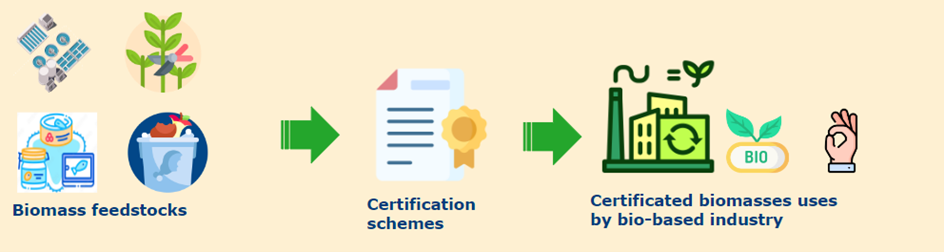
Biomass feedstock, CErification schemes, certificated biomasses uses by bio-based industry

How can this goal be achieved?

  • By mapping current European biomass flows;
  • By developing a multidimensional traceability and impact assessment framework;
  • By integrating new criteria into certification schemes, aligned with the EU taxonomy and EU corporate due diligence regulations;
  • By creating a platform for stakeholders to facilitate collaboration and information exchange;
  • By developing an ICT tool for the management and traceability of bio-based supply chains.

What are the expected benefits?

  • Increased transparency, trust and social acceptability among consumers and industries.
  • Stimulation of innovation and the development of new circular value chains.
  • Reduced environmental impact through sustainable use of resources and the use of secondary raw materials.

Brief information

Project Details
Start September 2022
End August 2025 (ongoing)
Theme Circular economy, sustainability
Funding SI (Horizon Europe)

The four case studies

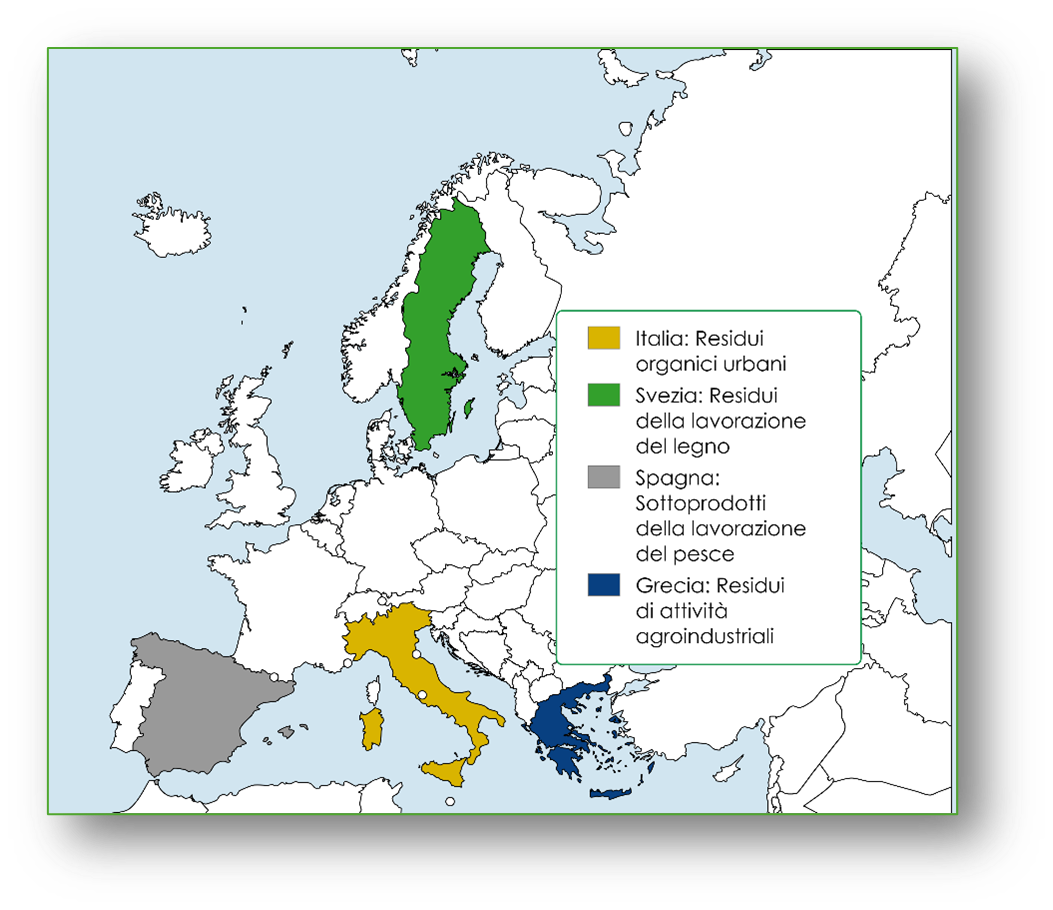
The project aims to improve traceability and analyse the environmental performance of different types of biomass through four case studies representing different industrial sectors

  • By-products from the fish processing industry (Spain)
  • Urban organic waste (Italy)
  • Wood processing residues (Sweden)
  • Residues from agro-industrial activities (Greece)

In the case study developed with Università Politecnica delle Marche and Cluster Spring, Gruppo CAP will analyse urban organic waste as an area of interest, in particular sewage sludge from wastewater treatment, liquid waste from the food industry and the organic fraction of municipal solid waste.

Italy: Urban organic waste Sweden: Wood processing residues Spain: By-products of fish processing Greece: Residues from agro-industrial activities

The consortium

The project brings together a consortium of 16 partners, including universities, research centres, businesses and non-governmental organisations from seven European countries: a wide range of key players in the water and environmental sustainability sectors

This network includes prestigious universities at the forefront of scientific research, specialised research centres, private companies operating in the sector and non-governmental organisations committed to environmental protection.

The project leader is Cetaqua, a model of public-private collaboration created to ensure the sustainability and efficiency of the water cycle.

Universities and technology centres:

  • Cetaqua - Water Technology Centre - Project Coordinator
  • CERTH (Centre for Research & Technology Hellas)
  • Ri.SE
  • Brunel University London
  • USC (Universidade de Santiago de Compostela)
  • Università Politecnica delle Marche
  • UnitelmaSapienza

Private companies and industrial clusters

  • ANFACO-CECOPESCA - Fisheries and fishing sector
  • EGM (Easy Global Market) - Research and engineering solutions and services to accelerate the time-to-market of new information technologies.
  • SPRING - Italian Circular Bioeconomy Cluster.

Standardisation, certification and communication organisations

  • nova Institute - research and consulting on the use of renewable bio-based resources
  • Rete di Cittadinanza Attiva - promoting civic participation and protecting citizens’ rights
  • meo Carbon Solutions - solutions for reducing carbon emissions
  • Euradia - Impact and marketing of R&D projects
  • UNI (Italian Standardisation Body) - definition and dissemination of technical standards
partners' logos