
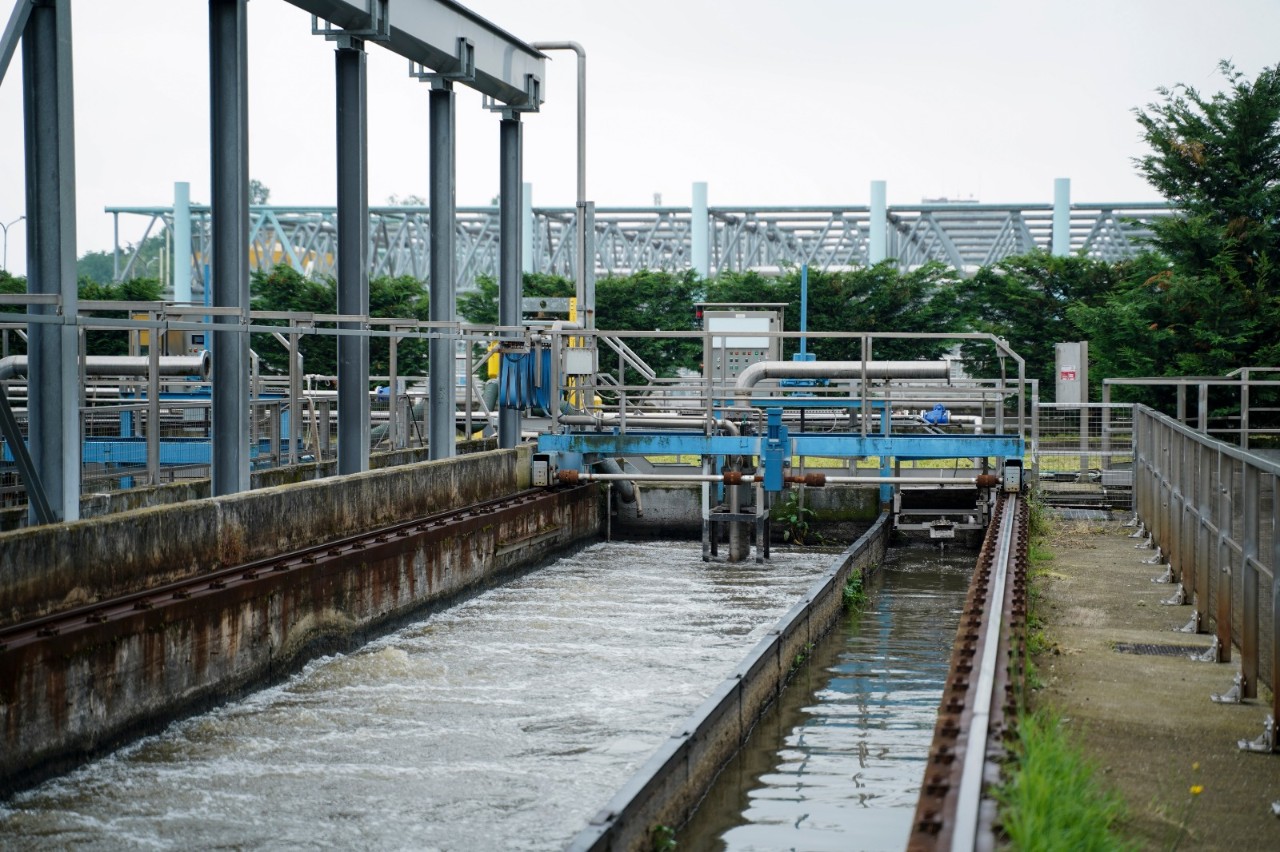
From waste to resource through the development of innovative technologies to recover phosphorus from wastewater and urban sludge. This is the goal of NEOFOS, a pilot programme with a total investment of nearly €1.5 million, funded under the MASE – Critical Raw Materials call and led by Gruppo CAP, together with MM Spa, Politecnico di Milano (POLIMI) and the University of Bologna (UNIBO).
The project deploys innovative technologies and strategies for nutrient management and phosphorus recovery as a strategic resource, creating a territorially integrated circular economy model unique in Italy.
CONTEXT
An essential element for fertilizers and industrial applications – including lithium iron phosphate batteries – phosphorus is increasingly central to European strategies aimed at reducing dependence on non-EU markets, also through urban mining practices.
Gruppo CAP will act as project leader, starting from its Bareggio plant, where a first demonstration facility will be installed, building on the experience gained with the BioPiattaforma in Sesto San Giovanni. The involvement of MM further strengthens the project’s territorial roots and enables testing of the solutions in large-scale facilities at one of Europe’s centres of excellence in water treatment.
OBJECTIVES AND TECHNOLOGICAL INNOVATION: A WIDESPREAD PILOT PROGRAMME
NEOFOS develops innovative circular approaches for phosphorus recovery and the production of high-quality secondary raw materials, along three integrated lines of action.
The first focuses on the biological removal of phosphorus from wastewater using S2EBPR (Side-Stream Enhanced Biological Phosphorus Removal) technology. This process leverages specific bacteria capable of capturing and accumulating phosphorus, reducing the use of chemical reagents and energy consumption, in line with new European nutrient emission limits. The pilot phase will begin at two plants and will later be validated at full scale. At this stage, MM is making its Milano San Rocco and Milano Nosedo plants available as case studies for process modelling and the definition of metropolitan-scale implementation scenarios.
In parallel, NEOFOS includes the recovery of phosphorus from sewage sludge and mono-incineration ash, converting it into struvite and other purified compounds suitable for use as fertilizers or in industrial processes, with the aim of achieving high-quality outputs while improving overall process sustainability.
Finally, the project will assess the integration and scalability of the technologies, analysing costs and environmental benefits and defining material management strategies in accordance with End-of-Waste criteria, in order to maximise efficiency and sustainability and create a replicable model.
Among Gruppo CAP’s key milestones are the launch of the S2EBPR demonstration plant in Bareggio and the optimisation of the “struvite” pilot plant in Sesto San Giovanni, enabling field testing of the developed solutions and the production of secondary raw materials ready for reuse.
PARTNERS AND COLLABORATION
The NEOFOS project is developed by a consortium of four partners, with Gruppo CAP acting as lead partner, responsible for overall coordination and plant-scale pilot activities. MM, a company owned by the Municipality of Milan, is a strategic operational partner for the testing and modelling phases, leveraging the expertise gained at its Milano San Rocco and Milano Nosedo facilities.
Politecnico di Milano (POLIMI) will support process modelling and optimisation activities related to phosphorus removal and recovery, including pilot studies on recovery from sludge mono-incineration ash. The University of Bologna (UNIBO) will contribute to laboratory-scale optimisation of recovery processes from ash, as well as to environmental and economic sustainability assessments and the definition of End-of-Waste pathways.
By integrating the expertise of utility operators and academia, the consortium will address all project phases in a coordinated manner, from operational testing to feasibility analysis and valorisation of recovered materials. In this respect, NEOFOS represents a replicable model capable of reducing Europe’s dependence on critical raw materials, while fostering industrial competitiveness and supply security.